Distributing building, sanitary and electrical materials has its own logic. Cement is bought by the ton and sold by the bag, cable by the roll and sold by the meter, tiles by the square meter and the carton. The client is often a contractor who wants delivery to a job site, not a shop. These details decide whether a system reflects reality or creates daily discrepancies.
Unit conversion: the foundation
| Item | Purchase unit | Sales unit | Conversion (example) |
|---|---|---|---|
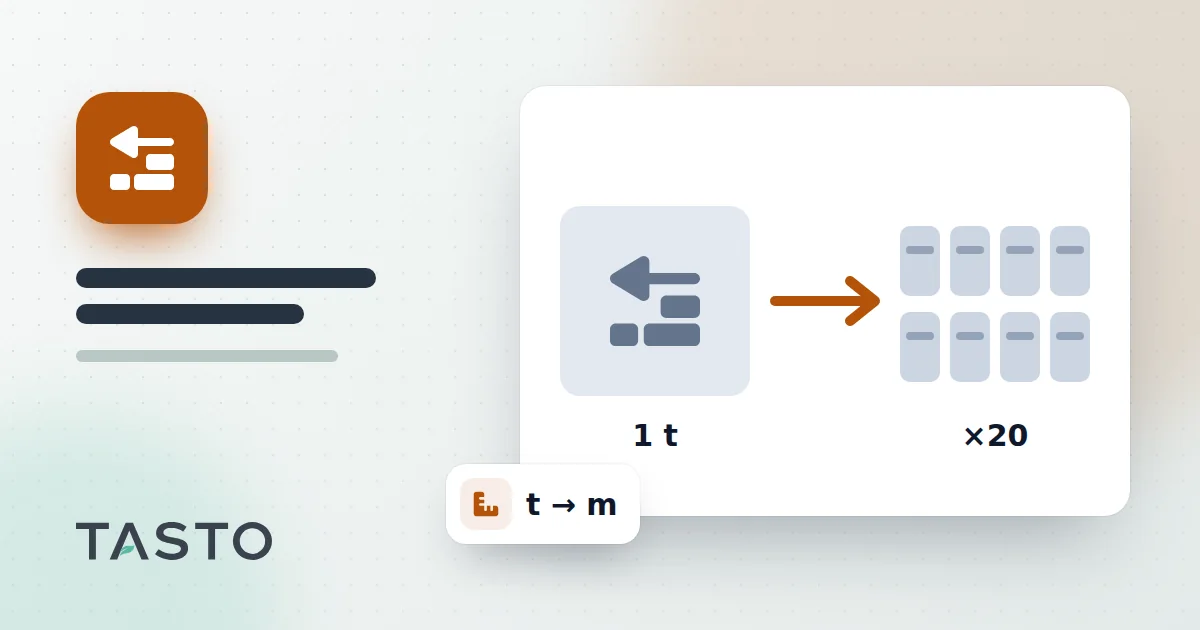
| Cement | Ton | 50 kg bag | 1 ton = 20 bags |
| Power cable | Roll | Meter | 1 roll = 100 m |
| Tiles | Pallet | Square meter | By cartons per pallet and carton area |
| Pipes | Bundle | Pipe | By pipes per bundle |
If a conversion factor is wrong, stock looks larger or smaller than reality, unit cost is miscalculated and prices follow. The factor belongs on the item card, and the system should compute quantities and cost in both directions automatically.
Delivering to the job site
- 1
Site address on the order
Each order is tied to the project site, not just the contractor's head office.
- 2
The right vehicle
Load and weight determine the vehicle, and some materials need a crane truck.
- 3
Proof of receipt
The receiver's name on site, the time, the location and a photo when needed.
- 4
Shortages and returns
Any shortage or breakage is recorded at delivery with a credit note, instead of a later dispute.
Contractor accounts
- Special prices per contractor or group, and per project when needed.
- A credit limit tied to volume and payment history, with post-dated checks tracked as in post-dated check control.
- A statement per project showing what was delivered to each site and what was paid.
- Quotations that turn into orders without retyping.
Showroom, warehouse and site
Without one system
- The showroom sells an item the warehouse ran out of
- Delivery slips for lack of the right vehicle
- The contractor disputes quantities with no proof
With one system
- The showroom sees every warehouse's stock live
- Delivery planned by load and vehicle
- Every delivery proven by name, time and location
Vehicle tracking and site arrival follow the same logic as geofenced proof of visit, except the location is a temporary project rather than a permanent client.
TASTO for building, sanitary and electrical distributionPrecise unit conversion, site delivery with proof of receipt, and contractor accounts per project.